A simple breakdown of strategy and why visuals come last
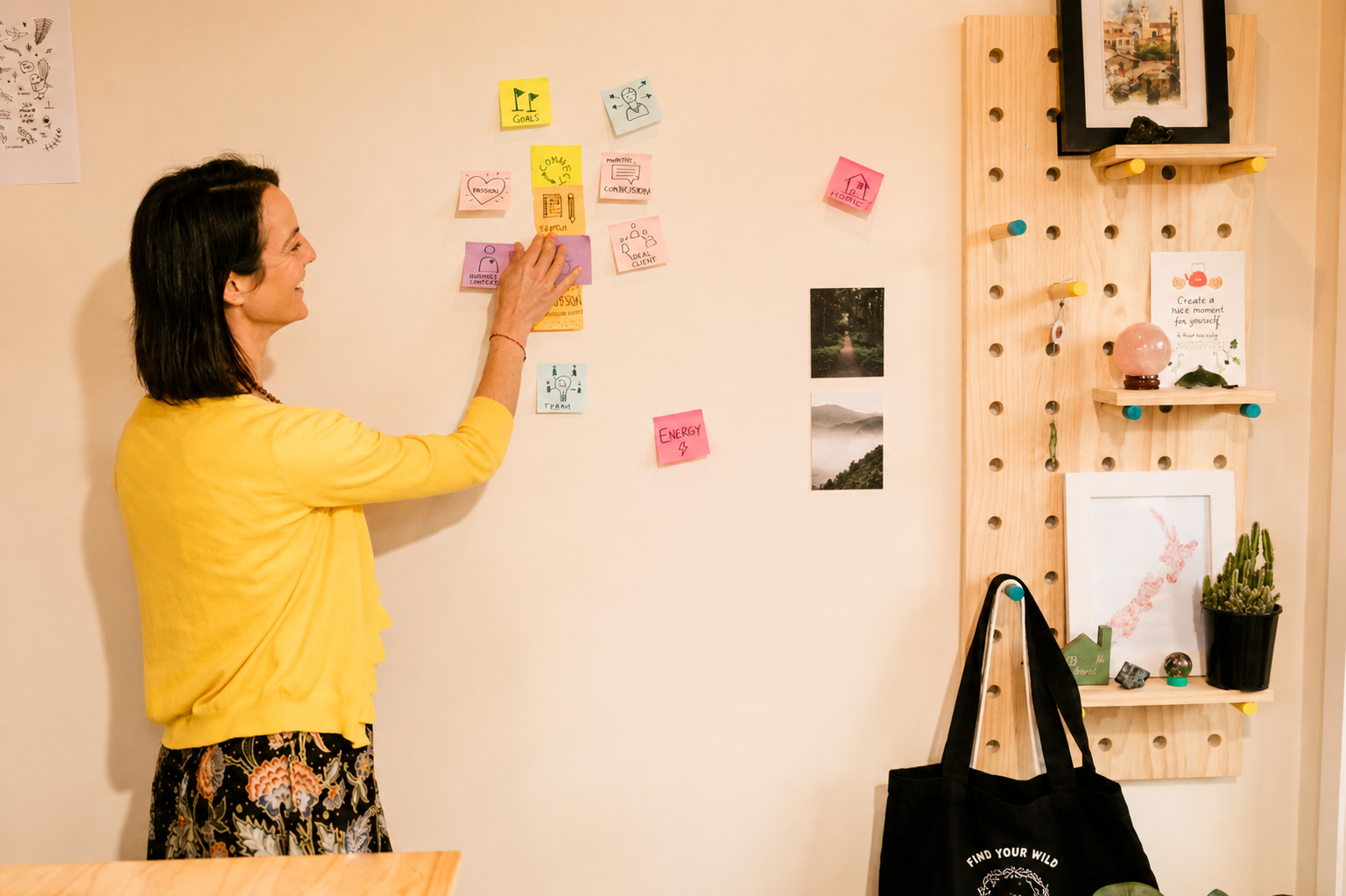
Good design isn’t just about making things look better. It’s about making meaning visible.
I've been reflecting lately on something I notice time and time again: the assumption that design is the final layer. The visual polish you add at the end, once everything else is done. In reality, design begins much earlier than that.
Design isn't just about how something looks. It's about the thinking that shapes it, a process grounded in understanding what a brand is trying to communicate, who it's speaking to, and why it exists at all.
This is where brand strategy comes in. Before any visual decisions are made, there's a process of clarifying your positioning, refining your messaging, and defining what genuinely makes your brand distinct. Without this foundation, design can easily become inconsistent and confusing, not just for the people you're trying to reach, but for you too.
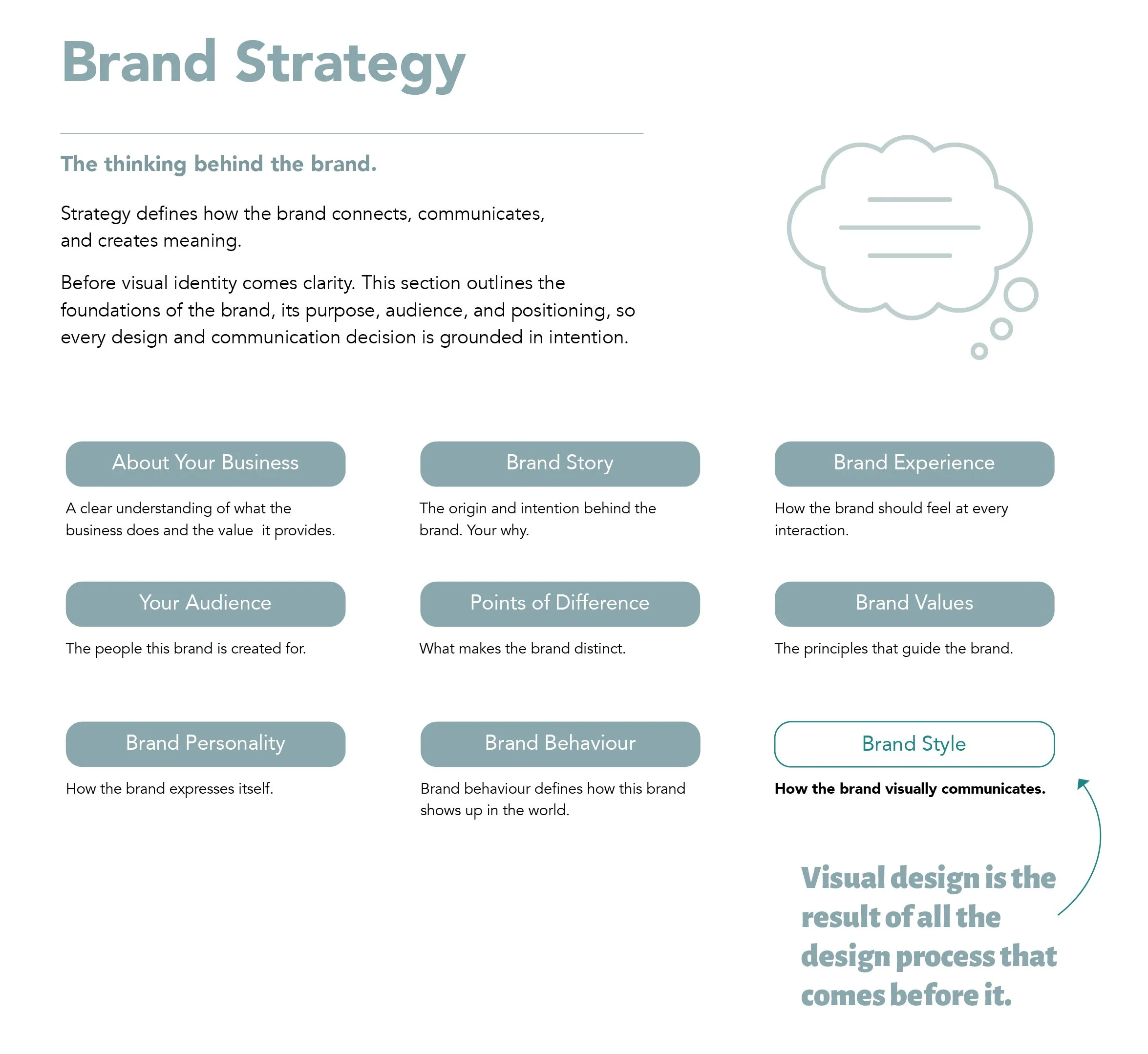
This infographic highlights just how much behind-the-scenes thinking informs great visual design. Each element matters. Today, let's start at the beginning:
TIP - About your business
Before you can communicate your brand clearly to anyone else, you need clarity on it yourself.
Do you have a clear, up-to-date picture of what you currently offer? Not just a list of products and/or services, but how they're packaged, how they're priced, and most importantly, what value they actually deliver to your clients?
It sounds simple, but this is often where brands lose their footing. Offerings evolve, new services get added, old ones quietly fade out, and the way you describe your work hasn't kept up. The result is messaging that feels muddled, or visuals that no longer reflect where you actually are.
It can be genuinely useful to write this down in one place: a simple, honest description of what you do, how you do it, and the difference it makes for the people you work with. Not a polished pitch. Just clarity. Something you can refer back to, and update as your business grows, shifts, and adapts.
When this foundation is clear, everything else, your messaging, your design, your content, becomes more consistent and more intentional.
My current thoughts on using AI well and ethically
Something I have been thinking about a lot lately is how the role of a designer is shifting. AI is making it easier than ever to create. Anyone can now produce visuals, copy, and brand assets in minutes. That is genuinely exciting, and it also brings its own challenges.
I am increasingly working with businesses that are using AI as part of their creative and brand process, and what I see time and again is that without the right human thinking and foundations in place, the output reflects that. Unclear prompts produce unclear and generic results. Confused strategy produces confused visuals. AI is a powerful tool, but it needs skilled human thinking behind it to do genuinely good work.
I want to be transparent about how I am currently using AI in my own work. In the strategy and thinking stages, once I have compiled my own thinking alongside my client's, AI can be useful in helping to organise and clarify that work. But it does not do the thinking for us. Once the work arrives at the visual stage, my decisions and design are my own. Tools like Photoshop now have AI driven features, such as image cleanup, that have become a natural and helpful part of a professional design workflow. But the creative thinking, the judgment, the intention behind every visual choice, that remains entirely mine. Design, for me, is a craft I love, and the work I produce is the result of a trained eye, genuine care, and human creative intention.
There are some great AI tools that can help you distill and articulate your brand strategy thinking. But finding the balance, knowing when to bring AI in and when to leave it out, is something I am increasingly helping clients navigate too.