Designing with intention in an AI-driven world
Here is how I am helping clients navigate it.
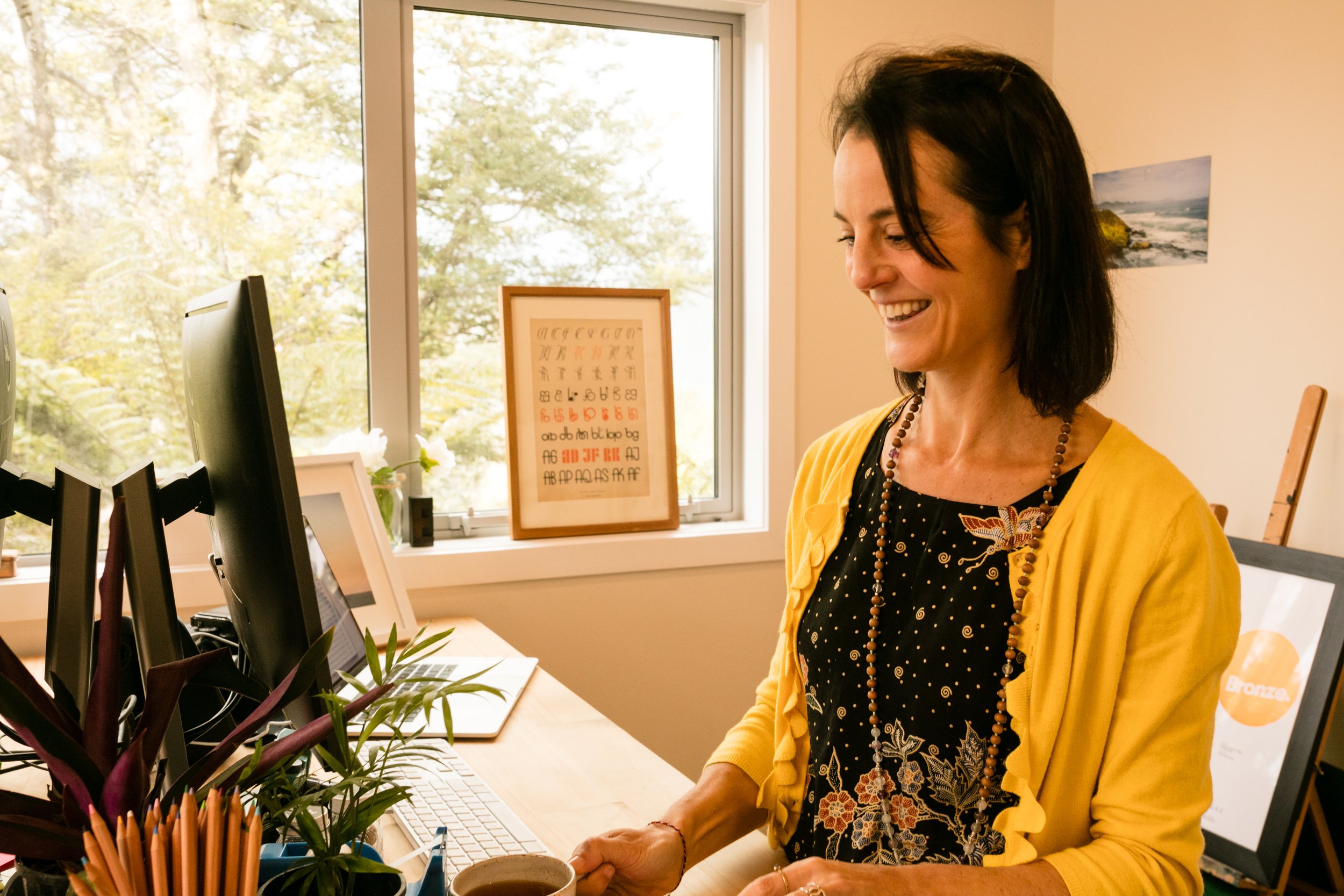
Many of my clients are doing their own ongoing design work, using tools like Canva and AI, often building on the foundations we've created together. These tools have made design more accessible, and that's genuinely a positive shift.
I'll be honest, I resisted AI for a while. As a designer who cares deeply about craft and originality, it didn't sit easily with me. But I've come to see that AI, used thoughtfully and ethically, is a genuinely powerful tool. Like any tool, it comes down to how you use it and the intention behind it. It can be used to shortcut, to copy, to churn out hollow content at volume. Or it can be used to think more clearly, to move more efficiently, and to do better work. I choose the latter, and that's the approach I bring to the clients I work with.
Here's what I'm observing: AI is becoming more powerful by the week, and used well, it can be a real asset for your business. You can produce content that would have taken far more time and resource before.
The challenge is knowing which tools to use (and resisting the urge to use too many at once), how to use them well, and then being able to see what's missing. As a designer, I can see what's missing in a lot of AI-generated work. Almost always it comes down to one of three things.
The first is strategy. Great visual design is informed by deep foundations: the brand strategy, the clarity of purpose, the understanding of audience. When AI generates visuals without that groundwork in place, the result can look polished on the surface but feel empty underneath, with nothing behind it to give it meaning or direction.
The second is the human element: the heart, the warmth, the subtle judgment that turns something competent into something that genuinely connects. And alongside that, the small design details that are just slightly off: spacing, hierarchy, colour relationships. Things that are easy to miss if you're not trained to see them, but that quietly drag a design down and make it feel flat or generic, no matter how much effort went into everything else.
The third is human connection. There is something that happens when two people think through a problem together that no AI can replicate. The conversation that goes off in an unexpected direction, the question that unlocks something you didn't know you were looking for, the sense that someone genuinely understands your business and cares about where it is going. That quality of thinking together is often where the most original and meaningful work begins, and it is something AI, however powerful, simply cannot offer.
My role is to help you build the clarity that makes everything work better, to guide you in using AI well for your brand, to walk beside you as you learn, and to bring that final human layer that makes the real difference.
TIP - Start with 1-2 tools, not five
When people start exploring AI for their business the temptation is to try everything at once. A new tool launches every week and it can feel like you're just so far behind, constantly.
The most effective approach is the opposite. Start with one tool, two at most, and learn to use it/them well before adding anything else.
My current recommendations if you are just starting out:
Claude for co-thinking. Use it to clarify your strategy, positioning, and messaging, or simply think something through out loud. The key is to feed Claude your thinking, your ideas, your instincts, and let it help you organise and articulate them. If you ask Claude to do the thinking for you, the output will feel generic and won't truly represent you or your brand. AI works best as a thinking partner, not a replacement for your own ideas. That said, it can be set up well to deeply understand your brand, which makes every conversation more useful and more aligned over time.
Canva if you're creating your own basic brand visuals. It has AI features built in now and when used with a clear brand foundation it can produce great results. It has its limitations, but as a basic design tool it can work very well.
Start with one. Get comfortable. Then decide if you need anything else. Most people find they don't need as many tools as they thought.
If your brand feels a little unclear or not quite aligned, if you're figuring out how to use AI well in your business, or if you're already using it and sensing something isn't quite landing, I can help with that.