In my earlier post, I spoke about brand experience and how every small touchpoint shapes the way people feel about your work, and why that experience needs to feel genuine.
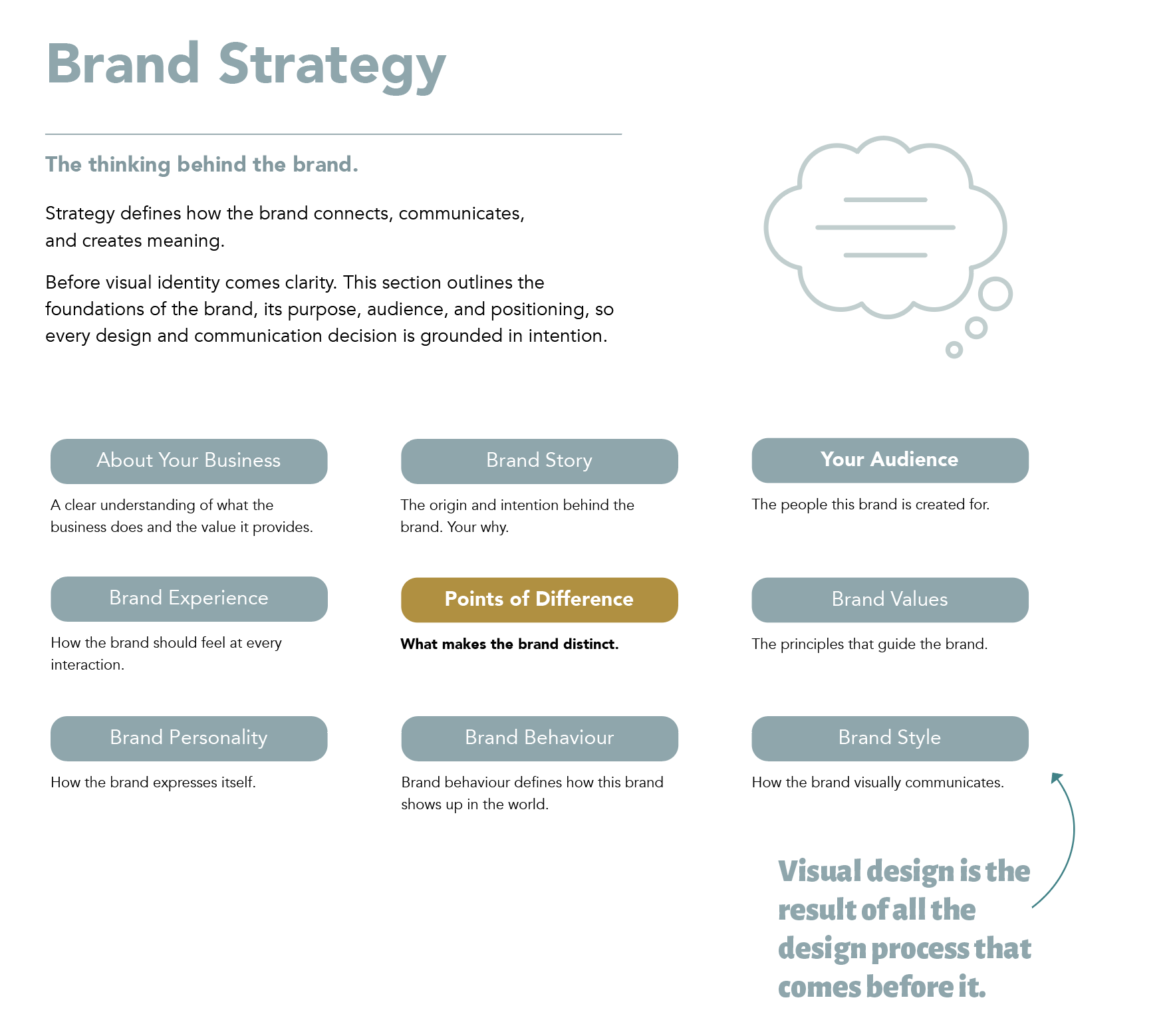
This time, I want to explore something that sits underneath all of it: your points of difference.

When people hear this, they often think of competition and of finding a clever way to stand out. But your points of difference are not about being louder or trying to be unlike everyone else.
They are about clarity. They are the things that make your approach, your perspective, and your work distinctly yours.
They might come from:
your experience and the path that brought you here
the way you work with people
what you value and refuse to compromise on
the way you see the world
the details you care about that others overlook
and the feeling people have when they work with you.
Same service, different experience
Many people in the same field offer similar services. What is rarely the same is the person behind them. Two designers, two photographers or two coaches can offer the same thing and create completely different experiences.
When you are not clear on what makes you different, it is easy to fall into generic language and describe your work in the same way as everyone else. When you are clear, your messaging becomes more confident and more focused, and the right people recognise themselves in it.
Often, your points of difference are things you do so naturally that you barely notice them. They can be hard to see from the inside, which is why the feedback people give you is so valuable.

What no tool can copy
This is where your points of difference matter more than ever. AI can produce polished, competent content in seconds, but it tends to produce the same polished, competent content for everyone. What it cannot copy is your lived experience, your perspective, and the way you do things because of who you are.
If you use AI as part of your process, your points of difference are what keep your work sounding like you. They are the filter for deciding what to keep, what to change, and what to leave out. And if you can’t tell the difference between your work and a generic version of it, that is a good sign it’s time to get clearer on what makes you different.
TIP - Your Points of Difference
What makes you, you
Take a little time to reflect on what makes your work distinctly yours.
What do people often say about working with you?
What brought you to this line of work?
What do you do differently from others in your field?
What do you care about that others may overlook?
What do you want people to always feel after working with you?
What would be missing if you were not the one doing this work?
If a tool wrote about your business, what would it miss?